
Decoded – When holiday shopping becomes a threat vector (aka the Black Friday threat)
Attackers use AI assistants, leaked aliases, and prompt hijacking to run precise Black Friday phishing campaigns. Here’s how these threats work end-to-end.


Attackers use AI assistants, leaked aliases, and prompt hijacking to run precise Black Friday phishing campaigns. Here’s how these threats work end-to-end.

The Iberia data breach exposed 77GB of Airbus fleet maintenance files — a stark reminder that aviation security collapses when devices are trusted blindly. This #PacketHunters unpacks Zero Trust for airlines, lists recent aviation breaches, and shows CISOs how device-posture enforcement stops infostealers before they reach critical systems.

In a world where endpoints move faster than your perimeter ever could, Zero Trust becomes a system of continuous verification, not a framework on paper. This article unpacks why context-aware, AI-driven endpoint defense is now the backbone of real security.

In 2025, the new perimeter is your employees’ laptops.
From Snowflake to LastPass, breaches start when unmanaged devices become trusted by default.
This #PacketHunters dives deep into Zero Trust endpoint security, showing developers how to verify device health, enforce posture, and stop infostealers before they pivot into production.
Read the full breakdown on Baited.io.

Zero Trust isn’t a buzzword, it’s survival.
In a world where phishing emails wear corporate logos and university portals hide malicious forms, trust has become the attacker’s favorite exploit. This month, we dive deep into the mindset behind Zero Trust: questioning everything, assuming nothing, and turning awareness into action. Because at Baited, we believe prevention isn’t paranoia.. it’s precision!

What looks like a harmless calendar invite can be a hidden delivery system.
Attackers are now embedding base64-encoded HTML payloads inside .ics files — turning “urgent meeting” requests into stealth phishing and credential traps. In this week’s #PacketHunters, we dissect how HTML smuggling works inside calendar invites, how different mail clients handle it, and how to simulate it safely before the attackers do.

October isn’t just another month. It’s Cybersecurity Awareness Month, promoted worldwide by agencies like CISA in the US and ENISA in Europe. Their message is simple but urgent: cybersecurity is not just an IT problem, it’s a people problem.Awareness saves systems, organizations, and sometimes entire communities. At Baited, we believe the same – but with
There was a time when phishing emails were laughably easy to spot.Misspelled words, broken grammar, the classic “Nigerian prince” asking for a wire transfer. It was clumsy social engineering, and yet, surprisingly effective. Fast-forward to 2025, and phishing has become the most successful cyberattack vector worldwide. Not because it’s sophisticated in the traditional sense, but

Your smartwatch isn’t just counting steps, it’s quietly building a map of your life. Every heartbeat, sleep cycle, and GPS ping is logged across different apps and clouds, each one a potential breach point. When attackers combine those leaks with phishing emails that mimic trusted brands, the result is more than stolen data: it’s identity exposure, targeted scams, and a perfect playbook for social engineering.
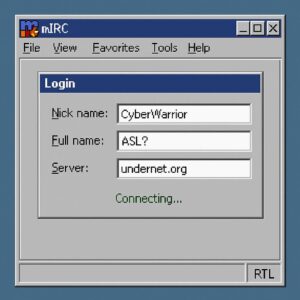
Once, we were true warriors of the net. No AI copilots, no phishing kits—just skills, instincts, and endless nights on IRC and BBS boards. Back then, scams were about access and reputation, loyalty was sacred, and every trick had to be earned. Fast forward to today: phishing is industrialized, automated, and ethics are gone. Less skill, more damage. And the scariest part? We’ve lost vigilance. That’s why phishing remains a neverending story.